What a wheat cent is
The Lincoln cent was introduced in 1909. Until 1958 its reverse showed two stalks of wheat framing the words ONE CENT. In 1959 the Lincoln Memorial replaced the wheat. Any cent with wheat on the back is at least that old.
The dates to pull out
Look under the date for a small D (Denver) or S (San Francisco). These are the wheat cents worth setting aside.
- 1909-S VDB, with the initials V.D.B. at the bottom of the back
- 1909-S without initials
- 1914-D
- 1922 with no mint mark
- 1931-S
- 1955 doubled die, with the date and lettering clearly doubled
- Any cent dated 1909 through 1915 with an S
Steel cents of 1943
Copper was needed for the war in 1943, so cents that year were struck in zinc-coated steel. They look silver or gray and stick to a magnet. More than a billion were made, and most sell for 10 to 50 cents.
A very few 1943 cents were struck on leftover copper blanks, and those are famous rarities. Nearly every copper-colored 1943 cent people find is a steel cent that someone plated. A magnet settles it: a real copper cent will not stick.
Common dates and bulk prices
Cents from the 1940s and 1950s are the most common. Dealers buy them by the roll or by the pound, and that is why prices per coin are low. Cents from the 1910s and 1920s bring more, especially with a mint mark.
Condition matters at the top end. A bright red uncirculated cent from the 1930s can sell for several dollars even when the date is ordinary.
Should you sort them yourself?
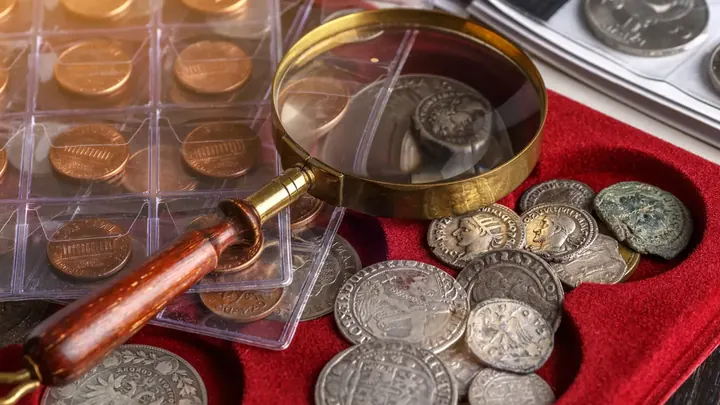
If you enjoy it, yes. A magnifying glass and the list above will find most of the better coins. If you have a coffee can and no patience, bring the can. We sort through wheat cents quickly and will show you anything good we find.
How much is a pound of wheat pennies worth?
A pound holds about 145 cents. At common-date prices that is roughly four to seven dollars.
Is a 1944 wheat penny rare?
No. The ordinary copper 1944 cent is very common. A 1944 cent struck in steel is the rare one.
SellOld coins and sets